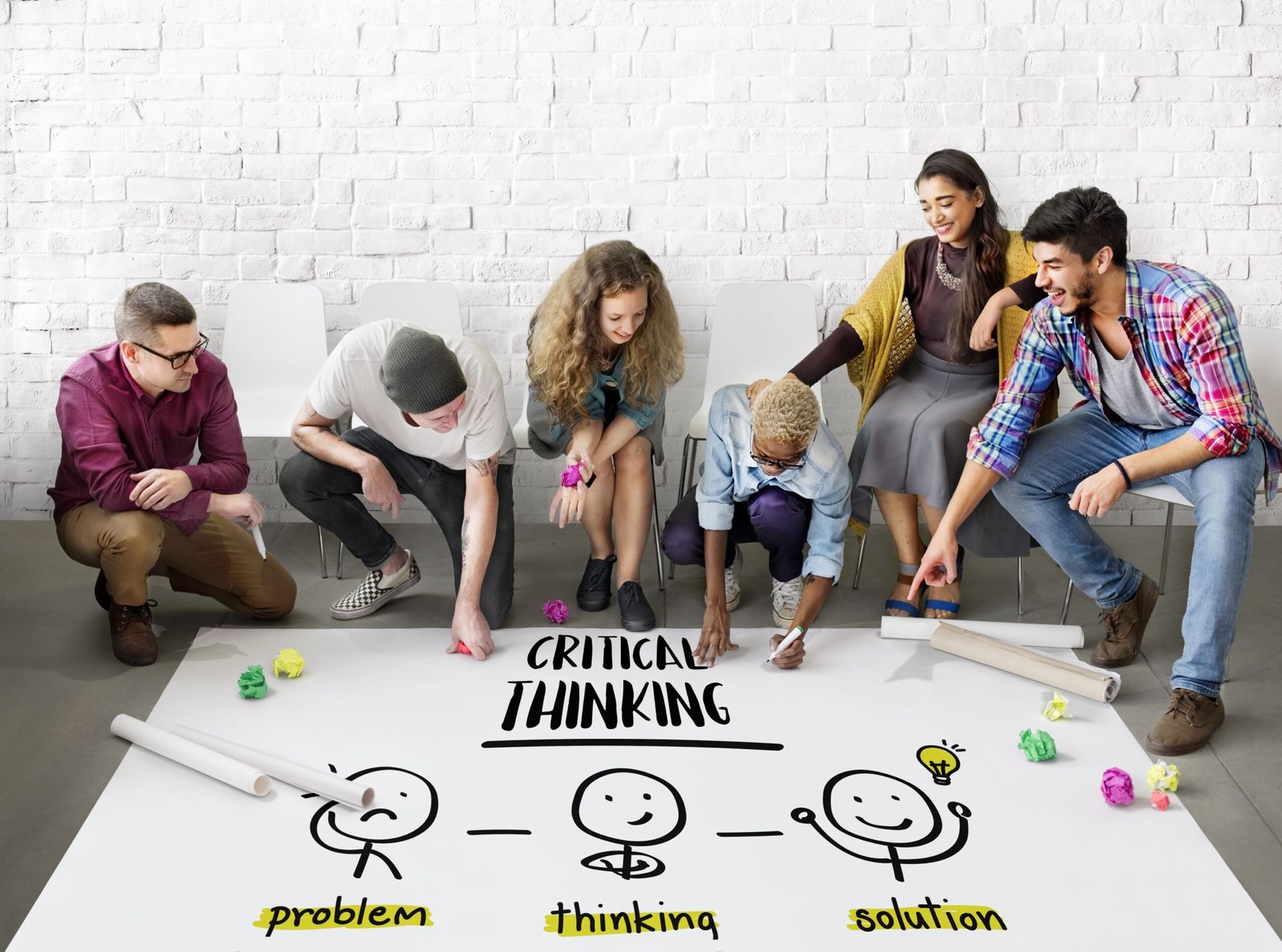
Education is about much more than memorizing facts, completing assignments, and passing examinations. In a world filled with information, students need the ability to understand complex ideas, evaluate different perspectives, and make thoughtful decisions. Critical thinking has therefore become an essential part of modern education.
From academic research to everyday problem-solving, critical thinking helps individuals approach challenges with curiosity and confidence. It encourages students to question assumptions, examine evidence, and develop their own conclusions instead of accepting every piece of information without consideration.
As educational environments continue to evolve, developing these skills can help learners prepare for academic success and future professional responsibilities.
Understanding Critical Thinking
Critical thinking is the ability to analyze information carefully, recognize relationships between ideas, and make decisions based on logical reasoning. It involves asking meaningful questions, identifying potential weaknesses in arguments, and considering alternative explanations.
For students, critical thinking begins with curiosity. Instead of simply remembering information from a textbook, learners are encouraged to explore why a particular concept matters and how it connects with other subjects.
For example, a student studying environmental science might investigate the causes of climate change, compare different research findings, and examine how environmental policies influence local communities.
This process encourages deeper understanding and helps students develop independent perspectives supported by reliable evidence.
Improving Academic Performance
Critical thinking can strengthen academic performance because it encourages students to understand subjects rather than rely entirely on memorization.
When learners examine concepts from different angles, they become better prepared to answer analytical questions, participate in classroom discussions, and complete research assignments.
In mathematics, critical thinking helps students identify appropriate methods for solving unfamiliar problems. In literature, it allows them to explore themes, evaluate characters, and interpret different meanings within a text.
These abilities are especially useful in higher education, where students are often expected to conduct independent research and support their arguments with credible sources.
By developing analytical habits early, learners can approach increasingly complex academic tasks with greater confidence.
Encouraging Independent Learning
Independent learning is an important skill for students who want to continue developing their knowledge beyond the classroom.
Critical thinking supports this process by teaching learners how to identify information gaps, investigate unfamiliar subjects, and evaluate the quality of available resources.
When students encounter a challenging topic, they can use analytical questions to guide their research. They might consider which sources are trustworthy, whether the evidence supports a particular conclusion, and what additional information could improve their understanding.
These habits are particularly important in the digital age, when search engines and social media provide enormous amounts of information.
Rather than accepting the first answer they discover, students who think critically learn to compare sources and make informed judgments.
The Role of Teachers in Developing Critical Thinking
Teachers play a major role in creating classrooms where critical thinking can grow. Their teaching methods influence whether students simply receive information or actively participate in understanding it.
Open-ended questions are one effective way to encourage analytical thinking. Instead of asking students to repeat definitions, teachers can invite them to explain relationships, defend opinions, or suggest possible solutions to real-world problems.
Group discussions can also help learners understand different viewpoints. When students respectfully challenge ideas and listen to alternative explanations, they develop communication skills alongside analytical abilities.
Project-based learning provides another useful opportunity. Research assignments, scientific investigations, and collaborative presentations encourage students to apply knowledge rather than simply memorize it.
A supportive classroom environment is essential because students need to feel comfortable expressing uncertainty, asking questions, and making mistakes.
Critical Thinking in the Digital World
The internet has transformed how people discover and share information. Although this creates valuable learning opportunities, it also makes information evaluation increasingly important.
Students regularly encounter online articles, videos, advertisements, and social media posts that present different claims about the same subject.
Critical thinking helps learners distinguish between evidence-based information and unsupported opinions. They can examine the original source, consider the author’s expertise, check publication dates, and compare claims with independent research.
These skills are particularly important when discussing science, public policy, technology, and other subjects where inaccurate information can influence important decisions.
Digital literacy and critical thinking work together to help students become responsible users of online information.
Building Better Problem-Solving Skills
Problem-solving is another important benefit of critical thinking. Academic and professional environments frequently present challenges that do not have one obvious solution.
Students who develop analytical skills can break complicated problems into smaller parts, identify possible causes, and evaluate different approaches.
For example, a business student working on a case study might examine customer needs, available resources, financial limitations, and potential risks before recommending a strategy.
This structured approach encourages practical decision-making instead of relying on immediate assumptions.
Problem-solving activities also help students recognize that mistakes can provide useful information. Reviewing unsuccessful approaches allows learners to adjust their strategies and improve future results.
Preparing Students for Future Careers
Modern workplaces value employees who can evaluate information, communicate ideas, and respond effectively to unexpected situations.
Critical thinking can support these abilities across many professional fields. Engineers use analytical reasoning to evaluate designs, healthcare professionals interpret complex information, and business teams assess opportunities and risks.
Students who practice critical thinking during their education may find it easier to adapt when their responsibilities change or when they encounter unfamiliar tasks.
These skills are also useful for teamwork. Employees often need to consider different opinions, explain their reasoning, and reach practical decisions with colleagues.
Education that emphasizes thoughtful analysis can therefore help learners prepare for a wide range of professional opportunities.
Practical Ways Students Can Strengthen Critical Thinking
Developing critical thinking requires regular practice. Students can begin by asking questions whenever they encounter new information.
Reading articles from different perspectives can improve their ability to compare arguments and identify missing evidence. Writing reflective notes can also help learners examine their own assumptions and explain how their opinions develop.
Participating in debates, group projects, and research activities provides additional opportunities to practice analytical reasoning.
Students should also learn to recognize the difference between a strong argument and a convincing presentation. An idea may sound persuasive without being supported by reliable evidence.
Over time, these habits can become part of everyday learning and decision-making.
Conclusion
Critical thinking is a fundamental skill in modern education because it helps students understand information, solve problems, and make responsible decisions. It supports academic achievement while encouraging curiosity, independence, and intellectual confidence.
Teachers, educational institutions, and students all have important roles in developing these abilities. Through meaningful discussions, research activities, and practical learning experiences, education can move beyond memorization toward deeper understanding.
As information and technology continue to shape society, students who can question assumptions, evaluate evidence, and think independently will be better prepared to navigate future academic and professional challenges.